The appeal of a mechanical watch can begin with a quiet moment at the crown, a glimpse through the caseback or the way its dial marks an ordinary afternoon. Start with the relationship you want to have with your watch, then compare the winding system, functions and proportions that make that relationship enjoyable.
Understand the mechanism, then choose the experience
Manual winding, automatic, power reserve and skeleton appear in the watches below. Each describes something different: how energy arrives, how long it lasts or how much of the mechanism you can see.
Mechanical describes the timekeeping system
In a conventional mechanical watch, a wound mainspring supplies energy and an escapement works with an oscillating balance to regulate its release. The movement is not simply a decorative object hidden behind the dial: it is the mechanism keeping time. When comparing watches, ask which caliber powers the exact reference and what its maker specifies, rather than treating every mechanical movement as identical.
Manual or automatic is a choice of winding routine
A hand-wound watch asks you to replenish the mainspring through the crown. An automatic adds a winding rotor that uses movement on the wrist to replenish that energy. Both can be conventional mechanical watches; automatic does not mean battery-powered. The manually wound NOMOS Orion and self-winding Piaget Polo Skeleton illustrate two different relationships with the same daily act of wearing a watch. Follow the instructions for the chosen caliber when winding or restarting it.
Power reserve is a duration; an indicator is a display
Power reserve describes how long a fully wound movement can run without receiving more energy. A power-reserve indicator is a separate display showing the remaining reserve: the presence of a duration in a specification does not prove there is a gauge on the dial. Hublot's Meca-10 Black Magic combines a stated ten-day reserve with a reserve display. For someone who rotates watches, compare the documented running time with their actual gaps between wears.
Seeing the movement: caseback, opening or skeleton
A transparent caseback gives a view from behind; a dial opening can reveal a particular component from the front. A skeleton design makes the movement itself a larger part of the visual composition. Piaget's Polo Skeleton pairs its openworked 1200S1 automatic movement with a sapphire caseback, while the Raymond Weil Freelancer here exposes its balance wheel through the dial. Choose the view that interests you, then check that the hands remain easy for you to read.
A modern mechanical watch can carry a long technical story
Grand Seiko introduced its 9S mechanical series in 1998, a useful reminder that traditional timekeeping continues to develop rather than standing still. The Hi-Beat 36000 GMT SBGJ273 below belongs to that mechanical lineage and combines its time display with a GMT function. Let that history guide a more specific conversation about the movement; it does not make every Grand Seiko the same technology, or establish the age of an individual watch.
Spring Drive is a distinct comparison, not another escapement
Spring Drive also uses a mainspring, but regulates the motion with a quartz oscillator, integrated circuit and electromagnetic control rather than a conventional mechanical escapement. That makes it a different movement choice, not a synonym for automatic mechanical. This selection concentrates on conventional mechanical watches; if a smooth-gliding seconds hand is your main interest, ask to compare Spring Drive separately by exact reference.
Begin with watches that invite a closer conversation about what can be seen and how the mechanism is arranged. These boutique discoveries range from an openworked dial to an automatic chronograph viewed through its caseback.
CHANEL
CHANEL Boy Friend Skeleton Watch
Reference
H5255
Movement
Manual Wind
Material
18k Beige Gold
Dial
Skeleton
A manually wound skeleton dial framed by 18K BEIGE GOLD and diamonds offers a gift direction for someone who wants the mechanism to share the visual focus with the case.
London Jewelers Watch Salon. Ask about this reference and viewing options.
The grey-hued 1200S1 automatic movement, skeleton dial and sapphire caseback make this a specific starting point for an interest in openworked architecture.
London Jewelers Watch Salon. Ask about this reference and viewing options.
Bvlgari Octo Finissimo Chrono GMT Titanium Grey Dial 42mm Automatic
Reference
103068
Movement
Automatic
Material
Titanium
Dial
Grey
A peripheral rotor, BVL 318 caliber and transparent caseback provide a focused discussion for someone curious about automatic winding within a titanium Chrono GMT design.
Bulgari at Americana Manhasset. Ask about this reference and viewing options.
Some shoppers want regular contact with the crown; others want self-winding convenience or a particular display. Compare these different experiences without making case size or complication count a ranking of quality.
Patek Philippe
Patek Philippe Complications 5172G Manual Wind
Reference
5172G-010
Movement
Manual Wind
Material
18k White Gold
Dial
Rose
Manual winding, a chronograph and an opaline rose-gilded dial give a collector several concrete reasons to consider this 41mm white-gold reference.
London Jewelers Watch Salon. Ask about this reference and viewing options.
A manual-wind movement with a ten-day reserve and visible reserve display makes stored energy part of the experience, in a substantial 45mm black-ceramic design.
London Jewelers Watch Salon. Ask about this reference and viewing options.
A 39mm steel case, blue dial and moonphase display offer a more restrained visual direction for someone who wants a calendar-related detail with automatic winding.
London Jewelers Watch Salon. Ask about this reference and viewing options.
The 43mm steel case, luminous black dial and brown calfskin strap suit a shopper comparing a clearly marked dial with a more substantial wrist presence.
London Jewelers Watch Salon. Ask about this reference and viewing options.
Movement interest need not mean an open dial. Start with the face you want to live with: quiet silver, a patterned white surface or autumnal red, then decide whether hand winding or automatic winding fits your habits.
NOMOS Glashütte
Nomos Glashutte Orion 38-Reference 384
Reference
384
Movement
Manual Wind
Material
Stainless Steel
Dial
White
The white-silver plated dial, tempered blue hands and manual winding offer an understated choice for someone who enjoys a deliberate winding routine.
Grand Seiko Elegance Collection Hi-Beat GMT Autumn
Reference
SBGJ273
Movement
Automatic
Material
Stainless Steel
Dial
Red
A striated red dial and gold-toned GMT hand add a seasonal color story to a 39.5mm mechanical Hi-Beat GMT, without exposing the mechanism on the front.
The white wave-decorated dial with dark accents makes the Riviera an alternative for someone choosing a graphic dial treatment and automatic SW200 movement.
Choose the feature you will actually notice: an exposed balance, a longer reserve, elapsed-time recording or another time-zone display. These are different reasons to enjoy a mechanical watch, not a checklist every watch needs to satisfy.
Raymond Weil
Raymond Weil Freelancer Stainless Steel 42.5mm Automatic
Reference
2780ST52001/M
Movement
Automatic
Material
Stainless Steel
Dial
Green
An exposed balance wheel against a green dial lets the wearer observe part of the RW1212 movement without choosing a fully skeletonized dial.
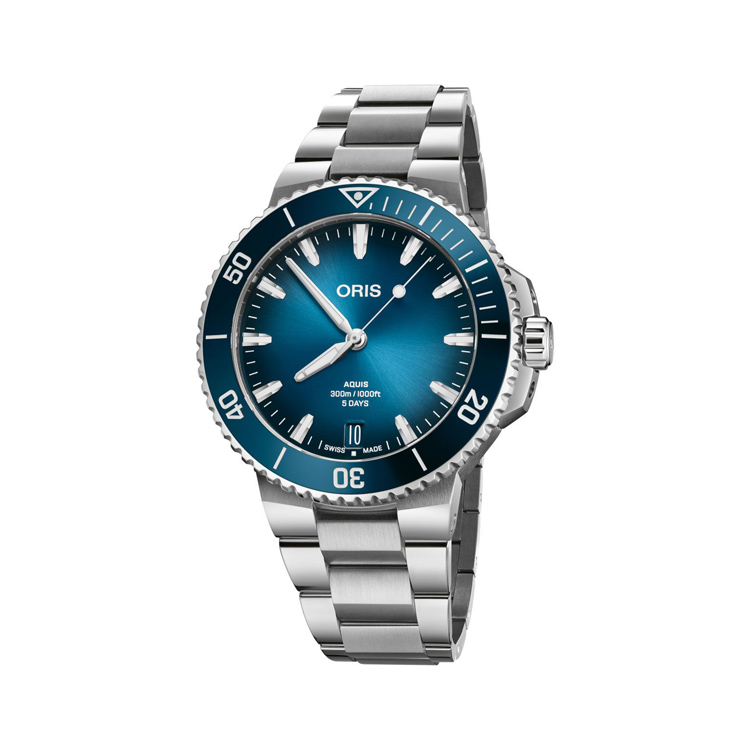
The automatic Calibre 400's stated five-day power reserve is a concrete comparison point for someone who changes watches during the week; the 43.5mm case warrants a fit check.
The Black Bay GMT combines a 24-hour graduated burgundy-and-blue bezel with a self-winding mechanical MT5652 movement for a shopper exploring travel-watch functions.
Should I choose a manual or automatic watch as a gift?
Start with the recipient's habits. The hand-wound NOMOS Orion makes winding part of the routine; automatic designs such as the Riviera replenish energy through wrist movement. If you do not know which experience they prefer, bring a shortlist to the London Jewelers Watch Salon or concierge and discuss how often the watch would be worn.
Does a mechanical watch need a visible movement to be interesting?
No. The Orion's composed dial and the Grand Seiko SBGJ273's striated red surface offer an interest in mechanical timekeeping without a skeleton front. If seeing components matters, compare the Piaget Polo Skeleton or the Freelancer's exposed balance wheel instead.
Does a stated power reserve mean there is an indicator on the dial?
No. Running duration and a visible reserve gauge are different features. The Meca-10 Black Magic here explicitly includes a power-reserve display. Do not assume that other watches with a reserve specification show the remaining energy; check the exact reference.
Will an automatic watch keep running when I leave it off my wrist?
It can run on its stored reserve until that reserve is exhausted. The Aquis Calibre 400 here states a five-day reserve, but that assumes a fully wound movement. For an occasional wearer, compare the maker's reserve specification and ask how to restart and set the chosen reference correctly.
Is Grand Seiko Spring Drive the same as an automatic mechanical movement?
No. Automatic describes a winding method; Spring Drive describes a distinct regulating system using a quartz oscillator and integrated circuit with a mainspring power source. The Grand Seiko selected here is the conventional mechanical Hi-Beat GMT SBGJ273. Compare the exact caliber rather than relying on automatic alone.
How do I choose a mechanical watch for someone who already collects?
Find out their existing references, preferred case proportions and whether they are more interested in manual winding, an open movement or a function they do not yet own. A chronograph, GMT and moonphase serve different interests. An appointment can help narrow that choice without assuming a larger or more complicated watch is the right addition.
Can I buy every watch in this guide online?
The two Shop Online selections link to individual product pages. The boutique selections lead to a specific boutique or the London Jewelers Watch Salon for assistance. Contact the linked location about the exact reference and a possible visit; its appearance here is not confirmation that the watch is present there.
A personal conversation about your next piece.
Share what you enjoy wearing, the occasion or the collection you have in mind. Discuss the exact reference, fit and purchase path with a London Jewelers advisor.